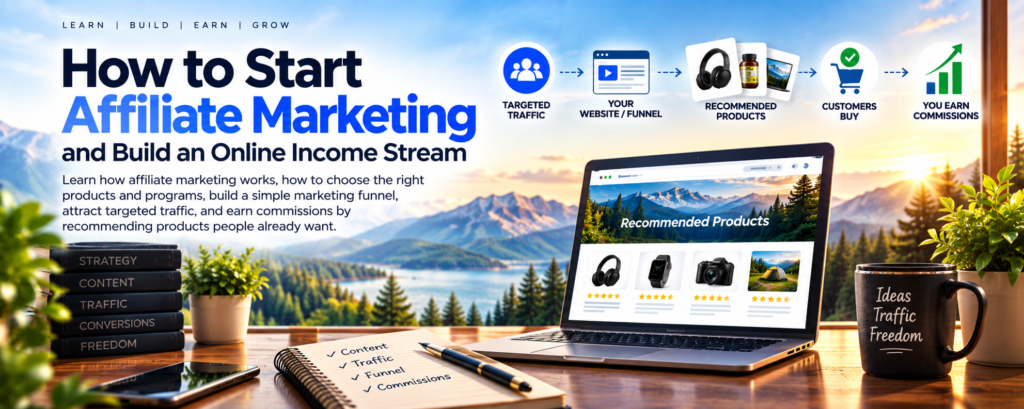
How to Start Affiliate Marketing: A Step-by-Step Path to Building an Online Income System
Learn how to choose a niche, find affiliate offers, build a funnel, generate targeted traffic, grow an email list, and create a system you can improve over time.
The Affiliate Marketing Path to $100K
Affiliate marketing can be one path toward building a scalable online income stream without creating your own physical product, managing inventory, or handling fulfillment.
The model is straightforward: identify a market, attract the right audience, recommend products or services that solve real problems, and earn commissions when qualified customers take action.
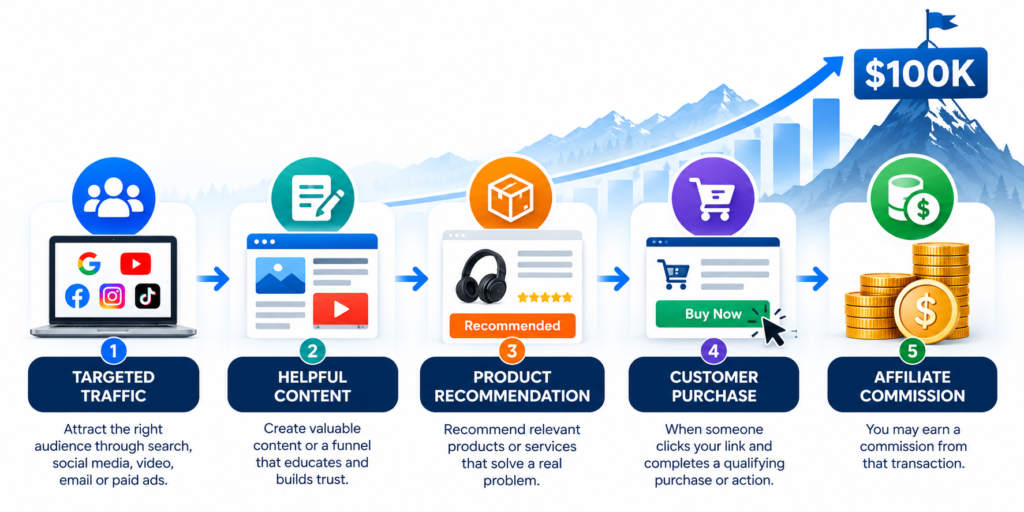
The goal is not to chase random affiliate links. It is to build a repeatable system around:
Traffic → Helpful Content → Product Recommendation → Conversion → Commission
Reaching $100K in revenue is not guaranteed and will depend on your niche, traffic, conversion rates, commission structure, consistency, and execution. The purpose of this path is to show you how to build the underlying system one step at a time.
What Is Affiliate Marketing?
Affiliate marketing is a performance-based business model where you earn a commission by referring customers to another company’s products or services.
Instead of manufacturing the product yourself, your role is to connect the right people with the right solution and create a marketing system that makes that connection consistently.
How Does Affiliate Marketing Work?
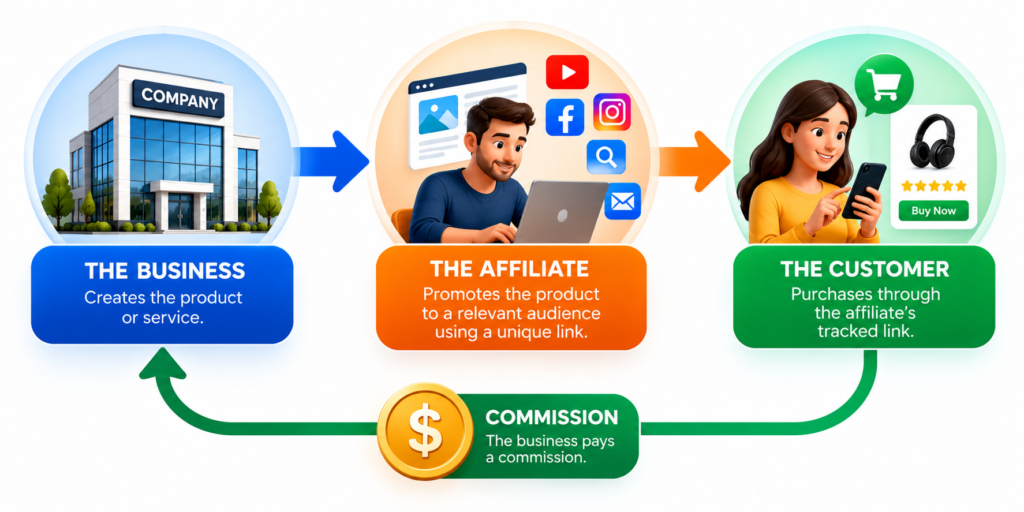
Affiliate marketing works by connecting three parties:
The Business — creates the product or service.
The Affiliate — promotes the product to a relevant audience.
The Customer — purchases through the affiliate’s tracked referral.
When you join an affiliate program, you typically receive a unique tracking link. If someone clicks that link and completes a qualifying purchase or action, the merchant may credit you with a commission.
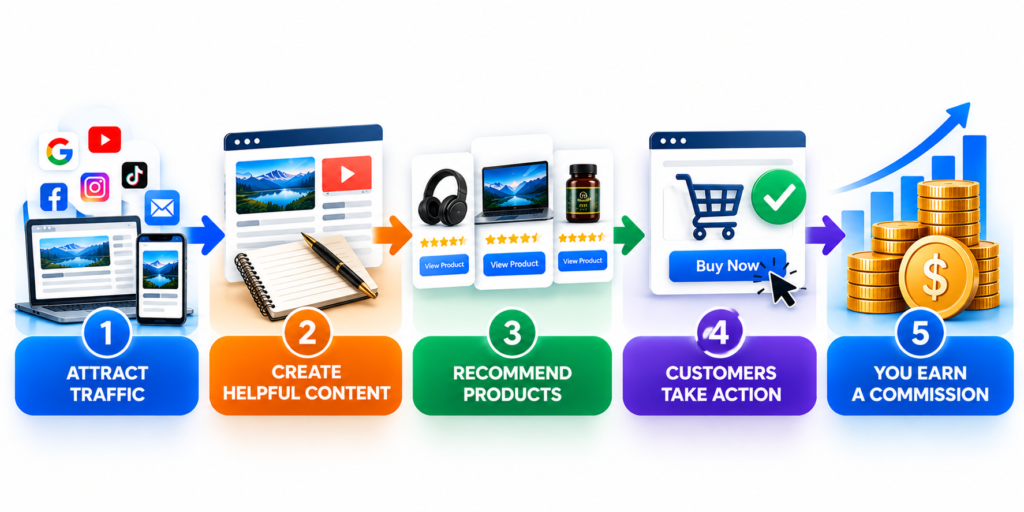
The basic process looks like this:
Targeted Traffic → Helpful Content → Affiliate Offer → Customer Purchase → Commission
The stronger each part of that system becomes, the stronger your affiliate marketing business can become.
Why Affiliate Marketing Can Be a Strong Online Business Model
Affiliate marketing removes many of the traditional barriers to starting a business.
You generally do not need to:
Manufacture products
Purchase large amounts of inventory
Rent warehouse space
Package orders
Handle shipping
Build a product from scratch
Your job becomes marketing.
That means learning how to attract the right audience, understand what they need, recommend relevant solutions, and guide them toward informed purchasing decisions.
Affiliate marketing is not passive income in the beginning.
It requires work, testing, content, traffic, and consistent improvement.
But once you build content and marketing systems that continue attracting qualified visitors, those assets can keep working long after they are created.

Step 1: Choose a Profitable Affiliate Marketing Niche
Your first major decision is deciding who you want to serve.
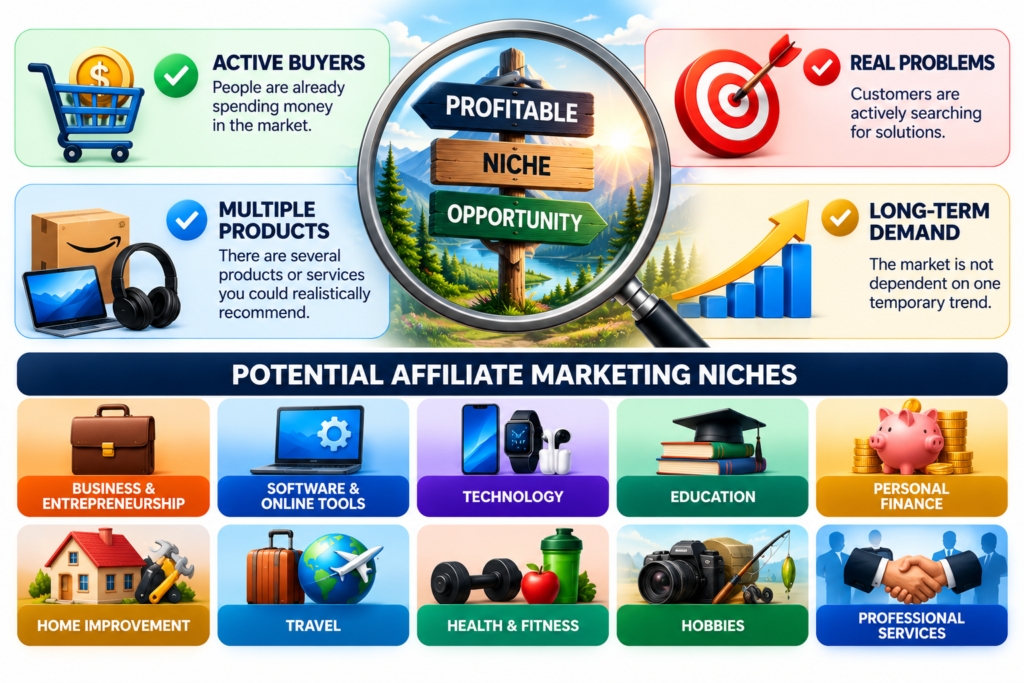
A strong niche typically has:
Active Buyers
People are already spending money in the market.
Real Problems
Customers are actively searching for solutions.
Multiple Products
There are several products or services you could realistically recommend.
Long-Term Demand
The market is not dependent on one temporary trend.
Potential affiliate marketing niches include:
Business and entrepreneurship
Software and online tools
Technology
Education
Personal finance
Home improvement
Travel
Health and fitness
Hobbies
Professional services
Do not choose a niche simply because someone online says it is profitable.
Choose a market where you can realistically understand the customer, create helpful content, and recommend products with credibility.
Step 2: Find Affiliate Products People Already Want
One of the biggest advantages of affiliate marketing is that you do not need to invent demand.
Your objective is to find products and services people are already searching for.
Instead of asking:
“What affiliate product can I sell?”
Start with:
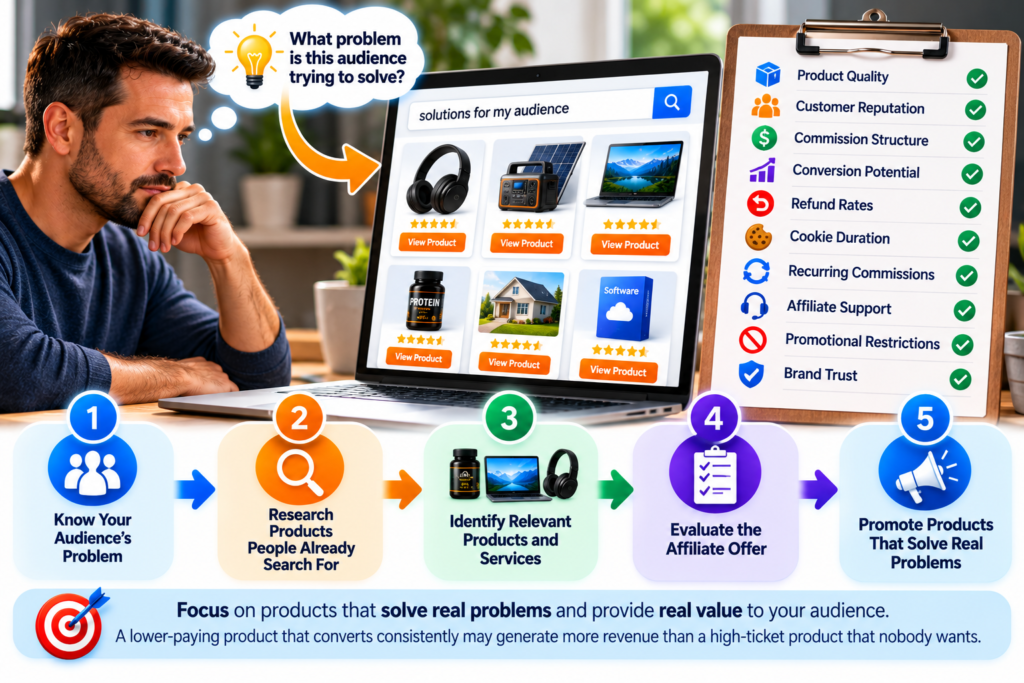
“What problem is this audience trying to solve?”
Then identify products that solve that problem.
Before promoting an affiliate offer, evaluate:
Product quality
Customer reputation
Commission structure
Conversion potential
Refund rates
Cookie duration
Recurring commissions
Affiliate support
Promotional restrictions
Brand trust
A high commission does not automatically make an offer good.
A lower-paying product that converts consistently may ultimately generate more revenue than an expensive product nobody wants.
Step 3: Build Your Affiliate Marketing Funnel
Beginners often make the mistake of sending visitors directly to an affiliate link.
That can work in some situations, but it gives you very little control over the customer journey.
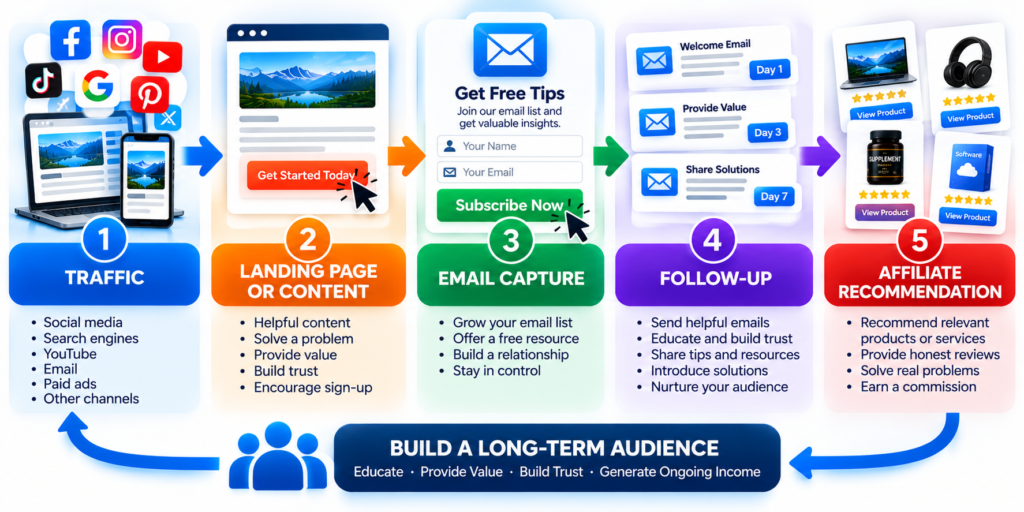
A stronger system may look like this:
Traffic → Landing Page or Content → Email Capture → Follow-Up → Affiliate Recommendation
This gives you the opportunity to educate the visitor before asking them to make a purchase.
It also helps you build an audience instead of depending entirely on one-time clicks.
Your funnel does not need to be complicated.
A simple system that works is more valuable than a complicated system that never launches.
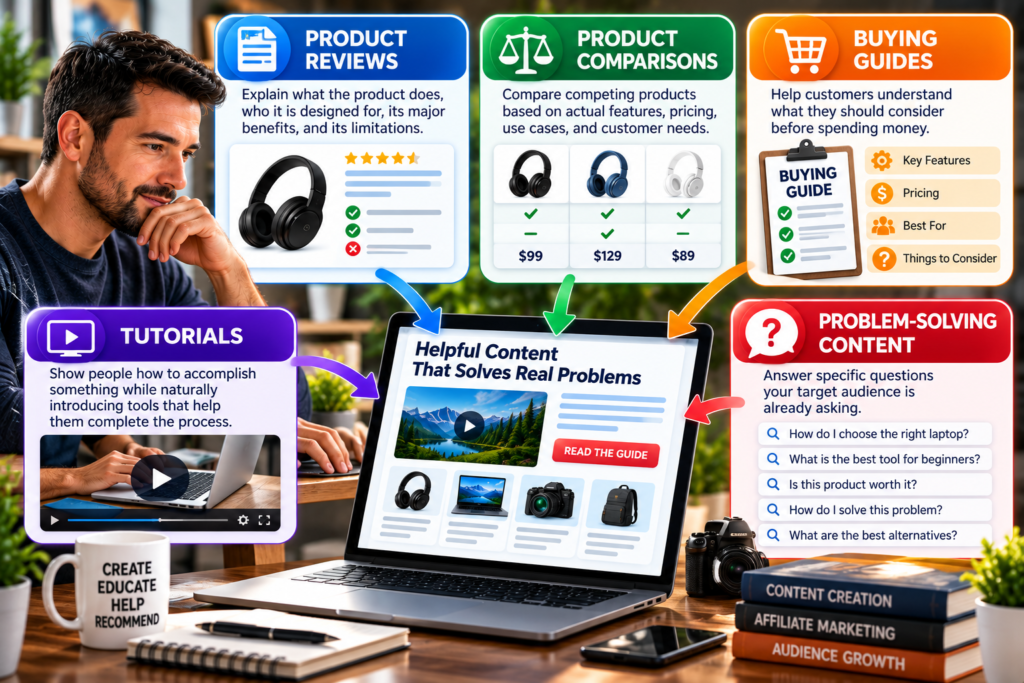
Step 4: Create Content That Attracts Potential Buyers
Content is one of the most effective ways to build an affiliate marketing business because it can attract people while they are actively researching a problem or purchase.
Product Reviews
Explain what the product does, who it is designed for, its major benefits, and its limitations.
Product Comparisons
Compare competing products based on actual features, pricing, use cases, and customer needs.
Buying Guides
Help customers understand what they should consider before spending money.
Tutorials
Show people how to accomplish something while naturally introducing tools that help them complete the process.
Problem-Solving Content
Answer specific questions your target audience is already asking.
The objective is not to hide affiliate links inside generic articles.
The objective is to create content useful enough that people trust your recommendation.
Step 5: Generate Targeted Traffic
Affiliate marketing depends on traffic.
But not all traffic is equally valuable.
You want people who are interested in the problem your offer solves.
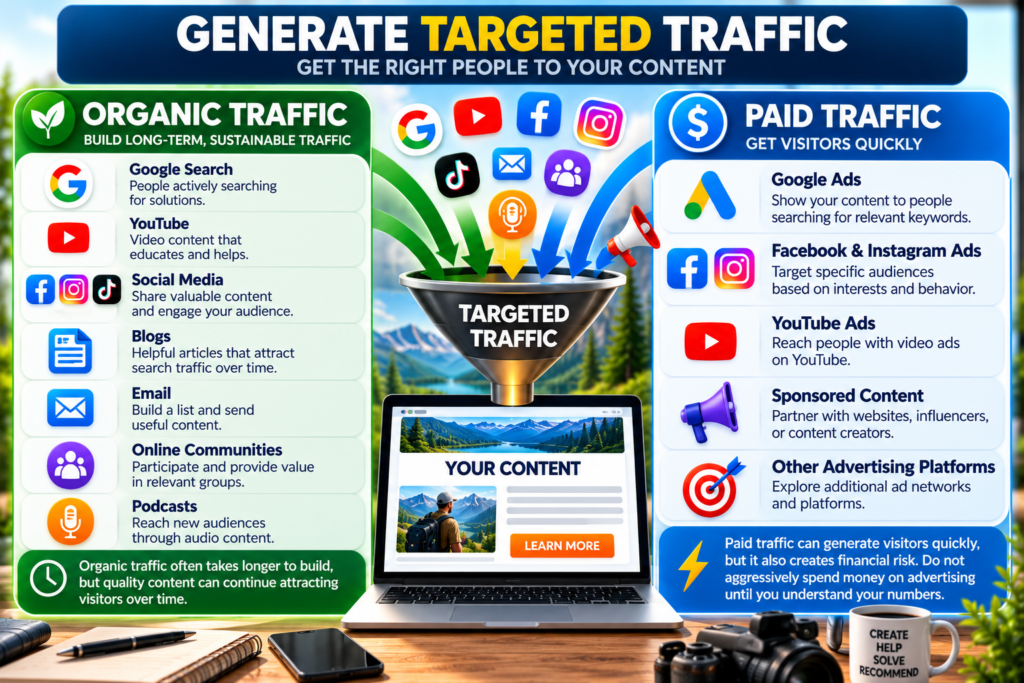
There are two primary ways to generate traffic.
Organic Traffic
Organic traffic can come from:
Google Search
YouTube
Social media
Blogs
Email
Online communities
Podcasts
Organic traffic often takes longer to build, but quality content can continue attracting visitors over time.
Paid Traffic
Paid traffic can include:
Google Ads
Facebook and Instagram Ads
YouTube Ads
Sponsored content
Other advertising platforms
Paid traffic can generate visitors quickly, but it also creates financial risk.
Do not aggressively spend money on advertising until you understand your numbers.
Step 6: Build an Email List You Control
Social platforms change.
Search rankings change.
Advertising costs change.
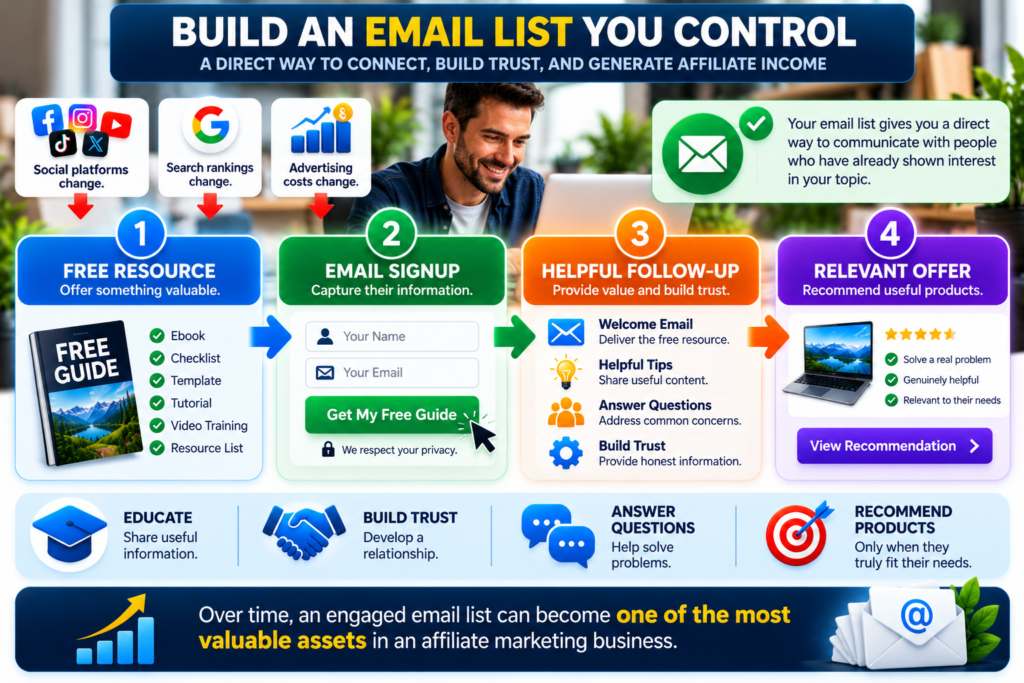
Your email list gives you a direct way to communicate with people who have already shown interest in your topic.
A simple email marketing process can look like:
Free Resource → Email Signup → Helpful Follow-Up → Relevant Offer
The objective should not be to bombard subscribers with promotions.
Use email to educate, build trust, answer questions, and recommend products when they genuinely fit the subscriber’s needs.
Over time, an engaged email list can become one of the most valuable assets in an affiliate marketing business.
Step 7: Track the Numbers That Matter
Affiliate marketing should be managed like a business.
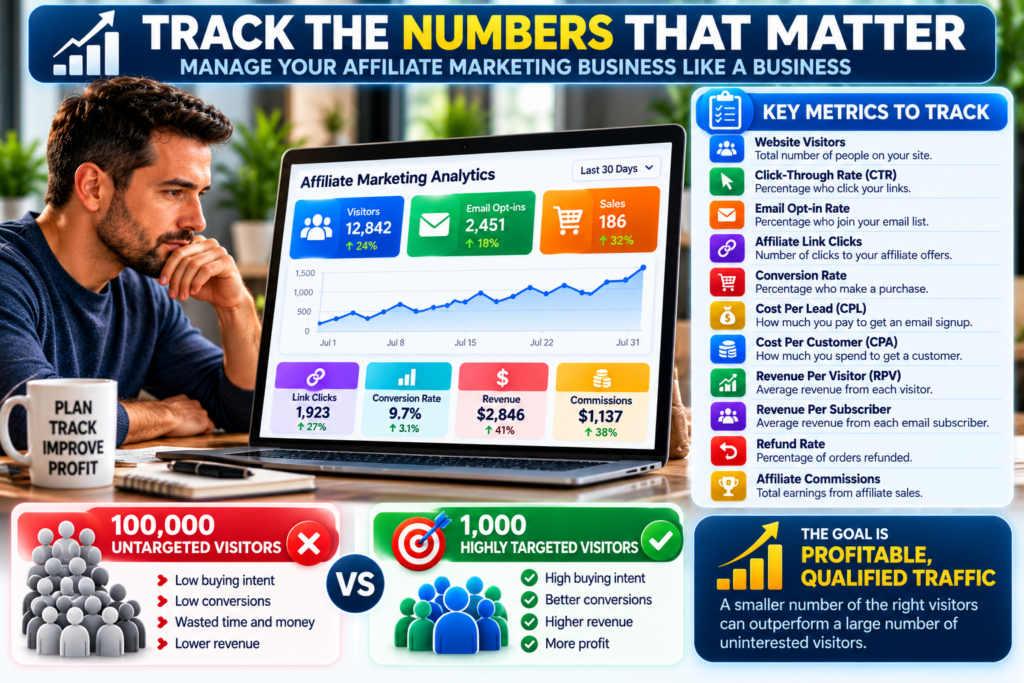
Track metrics such as:
Website visitors
Click-through rate
Email opt-in rate
Affiliate link clicks
Conversion rate
Cost per lead
Cost per customer
Revenue per visitor
Revenue per subscriber
Refund rate
Affiliate commissions
Do not measure success only by traffic.
A website with 1,000 highly targeted visitors can outperform a website receiving 100,000 visitors who have no buying intent.
The goal is profitable, qualified traffic.
Common Affiliate Marketing Mistakes to Avoid
Affiliate marketing becomes much harder when you treat it like a shortcut instead of a business.
Common mistakes include:
Promoting too many unrelated products
Choosing offers based only on commission size
Posting affiliate links without providing value
Ignoring email marketing
Relying entirely on one traffic source
Paying for advertising without tracking conversions
Publishing thin or generic content
Copying competitors
Recommending products you do not understand
Expecting immediate results
Failing to test and improve
Build assets.
Build systems.
Build an audience.
That is a much stronger strategy than chasing individual commissions.

The 5-Part Affiliate Marketing Path to $100K
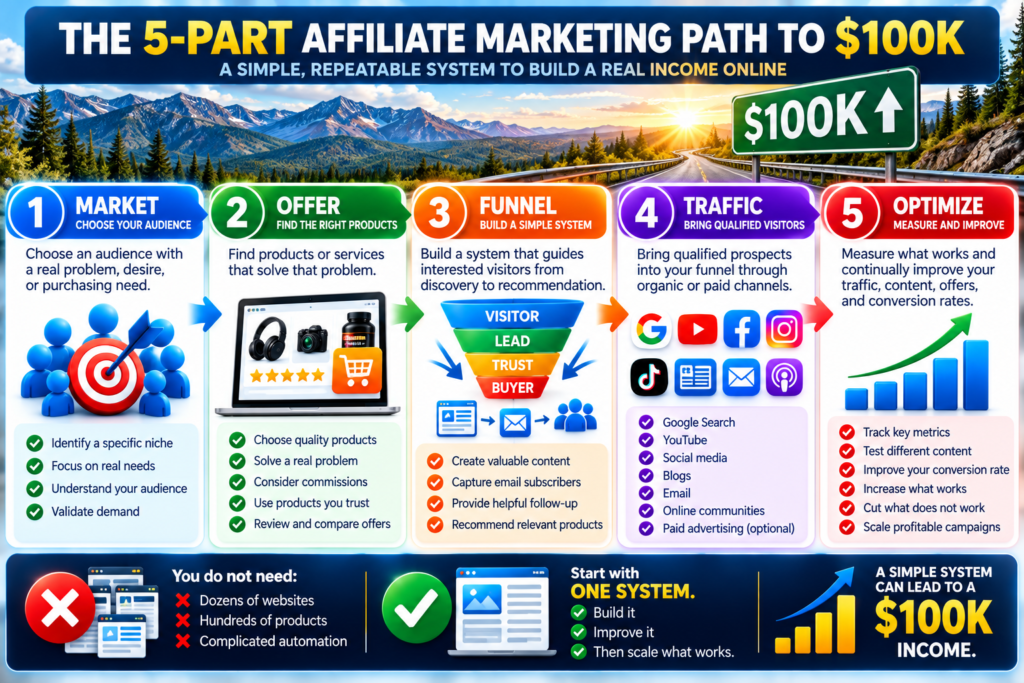
The affiliate marketing path can be simplified into five core stages.
1. Market
Choose an audience with a real problem, desire, or purchasing need.
2. Offer
Find products or services that solve that problem.
3. Funnel
Build a system that guides interested visitors from discovery to recommendation.
4. Traffic
Bring qualified prospects into your funnel through organic or paid channels.
5. Optimize
Measure what works and continually improve your traffic, content, offers, and conversion rates.
You do not need dozens of websites, hundreds of products, or complicated marketing automation to begin.
Start with one system.
Improve it.
Then scale what works.
What Could $100K in Affiliate Revenue Look Like?
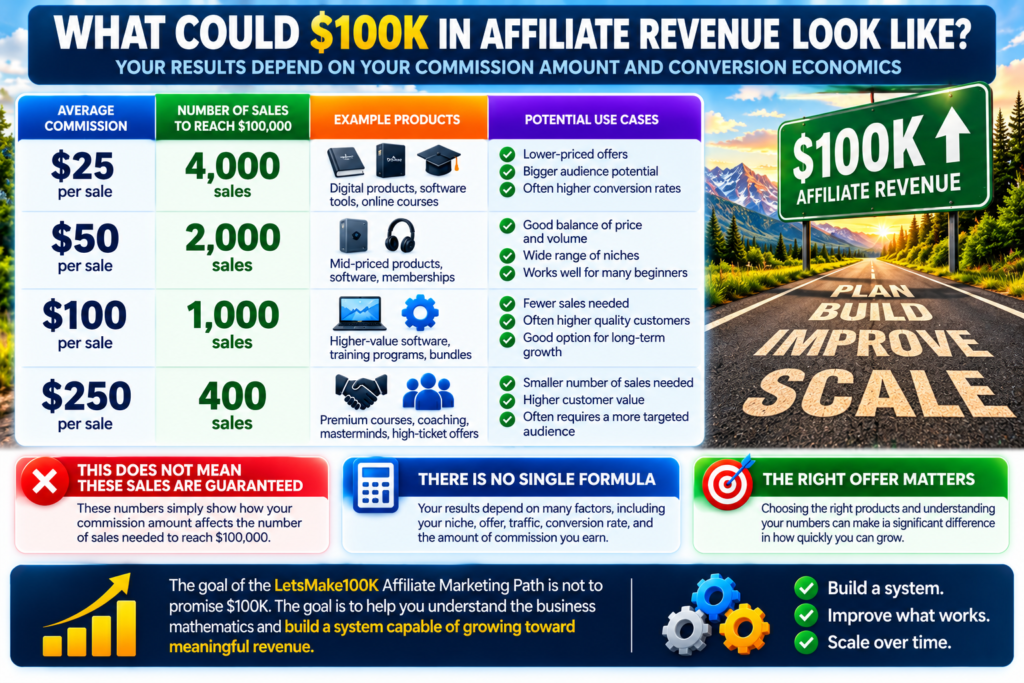
There is no single formula for reaching $100,000 in affiliate revenue.
Your results depend heavily on your commission amount and conversion economics.
For example:
$25 average commission = 4,000 sales
$50 average commission = 2,000 sales
$100 average commission = 1,000 sales
$250 average commission = 400 sales
This does not mean those sales are guaranteed.
It simply demonstrates why choosing the right offer and understanding your numbers matters.
The goal of the LetsMake100K Affiliate Marketing Path is not to promise $100K.
The goal is to help you understand the business mathematics and build a system capable of growing toward meaningful revenue.
Do You Need a Website for Affiliate Marketing?
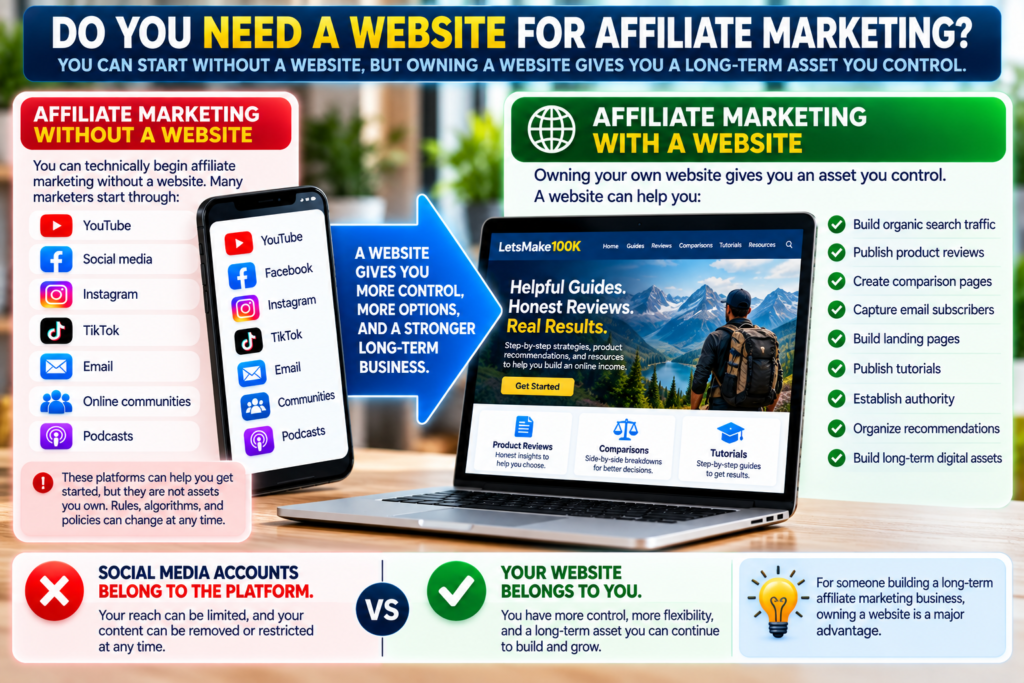
You can technically begin affiliate marketing without a website.
Some marketers start through YouTube, social media, email, or online communities.
But owning your own website gives you an asset you control.
A website can help you:
Build organic search traffic
Publish product reviews
Create comparison pages
Capture email subscribers
Build landing pages
Publish tutorials
Establish authority
Organize recommendations
Build long-term digital assets
Social media accounts belong to the platform.
Your website belongs to you.
For someone building a long-term affiliate marketing business, that distinction matters.
Can You Really Make Money With Affiliate Marketing?
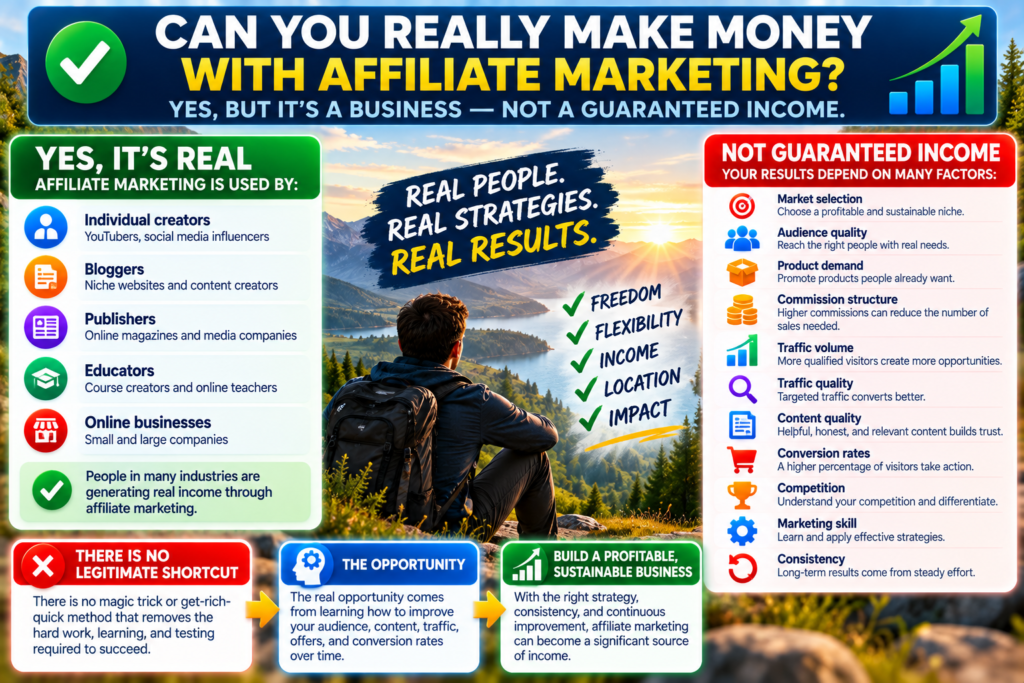
Yes.
Affiliate marketing is used by individual creators, bloggers, publishers, media companies, educators, and major online businesses.
But affiliate marketing is not guaranteed income.
Your results depend on factors such as:
Market selection
Audience quality
Product demand
Commission structure
Traffic volume
Traffic quality
Content quality
Conversion rates
Competition
Marketing skill
Consistency
There is no legitimate shortcut that removes those variables.
The opportunity comes from learning how to improve them.
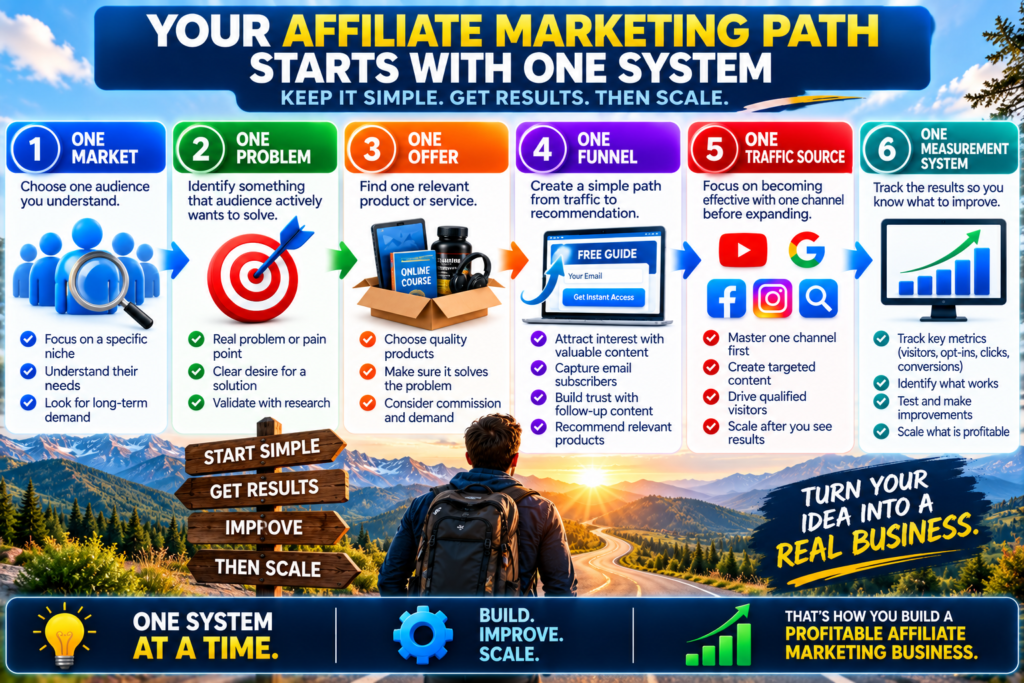
Your Affiliate Marketing Path Starts With One System
Do not try to master every strategy at once.
Start with:
One Market
Choose one audience you understand.
One Problem
Identify something that audience actively wants to solve.
One Offer
Find one relevant product or service.
One Funnel
Create a simple path from traffic to recommendation.
One Traffic Source
Focus on becoming effective with one channel before expanding.
One Measurement System
Track the results so you know what to improve.
That is how you begin turning affiliate marketing from an idea into an actual business.
The Affiliate Marketing Blueprint
If you want to move beyond learning what affiliate marketing is and start building your own system, the next step is following a structured roadmap.
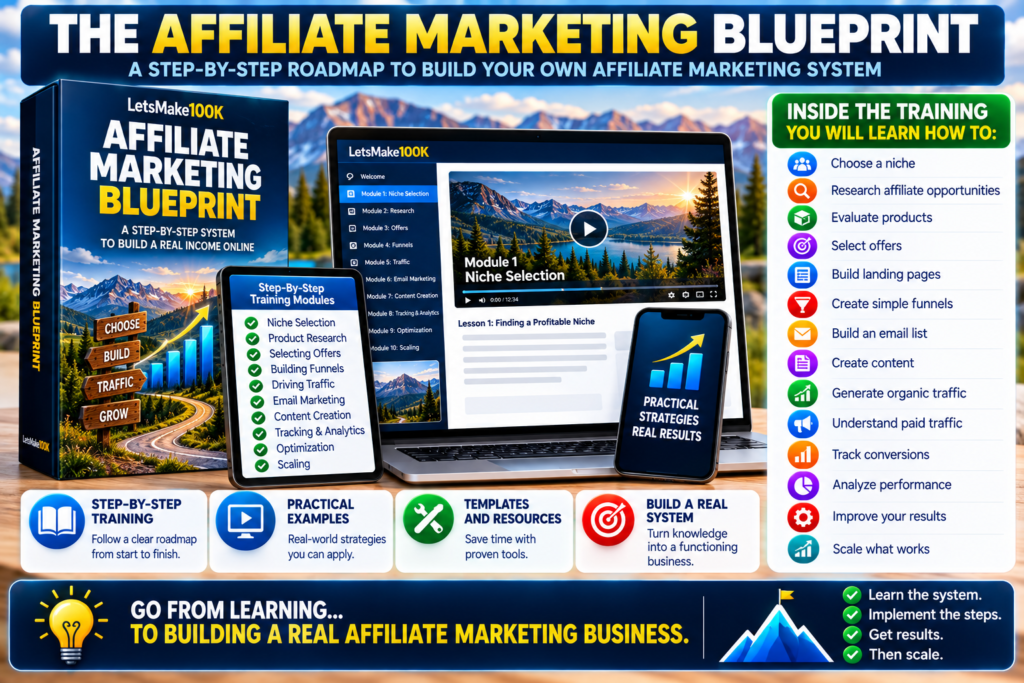
The LetsMake100K Affiliate Marketing Blueprint is designed to help you work through the process step by step.
Inside the training, you will learn how to:
Choose a niche
Research affiliate opportunities
Evaluate products
Select offers
Build landing pages
Create simple funnels
Build an email list
Create content
Generate organic traffic
Understand paid traffic
Track conversions
Analyze performance
Improve your results
Scale what works
The objective is not simply to give you more information.
The objective is to help you turn that information into a functioning affiliate marketing system.
Ready to Build Your Affiliate Marketing System?
You have learned how affiliate marketing works. Now it is time to put the pieces together.
The Affiliate Marketing Blueprint gives you a structured, step-by-step roadmap for choosing a niche, finding offers, building a funnel, creating content, generating traffic, growing an email list, tracking results, and improving what works.
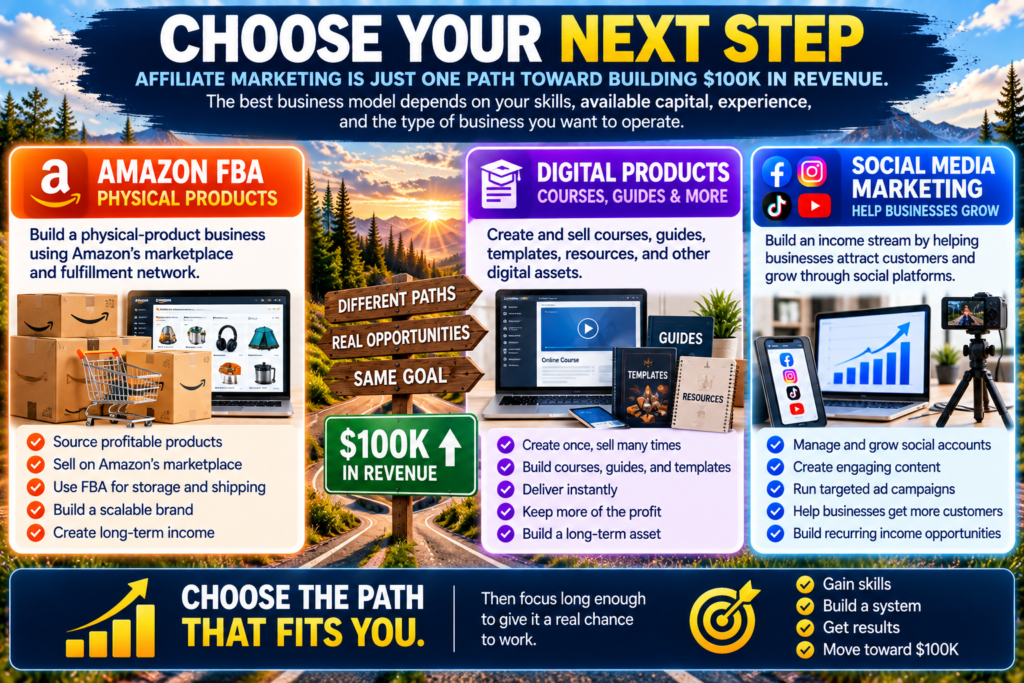
Choose Your Next Step
Affiliate marketing is only one path toward building $100K in revenue.
The best business model depends on your skills, available capital, experience, and the type of business you want to operate.
You can also explore:
Amazon FBA
Build a physical-product business using Amazon’s marketplace and fulfillment network.
Digital Products
Create and sell courses, guides, templates, resources, and other digital assets.
Social Media Marketing
Build an income stream by helping businesses attract customers and grow through social platforms.
Choose the path that fits you — then focus long enough to give it a real chance to work.