AMAZON FBA
Build Your Amazon FBA Business With a Clear Plan
Learn how to research profitable product opportunities, source inventory, calculate your true costs, create optimized listings, launch products, and grow an Amazon business strategically.
Product Research • Sourcing • Profitability • Listings • FBA • PPC • Growth
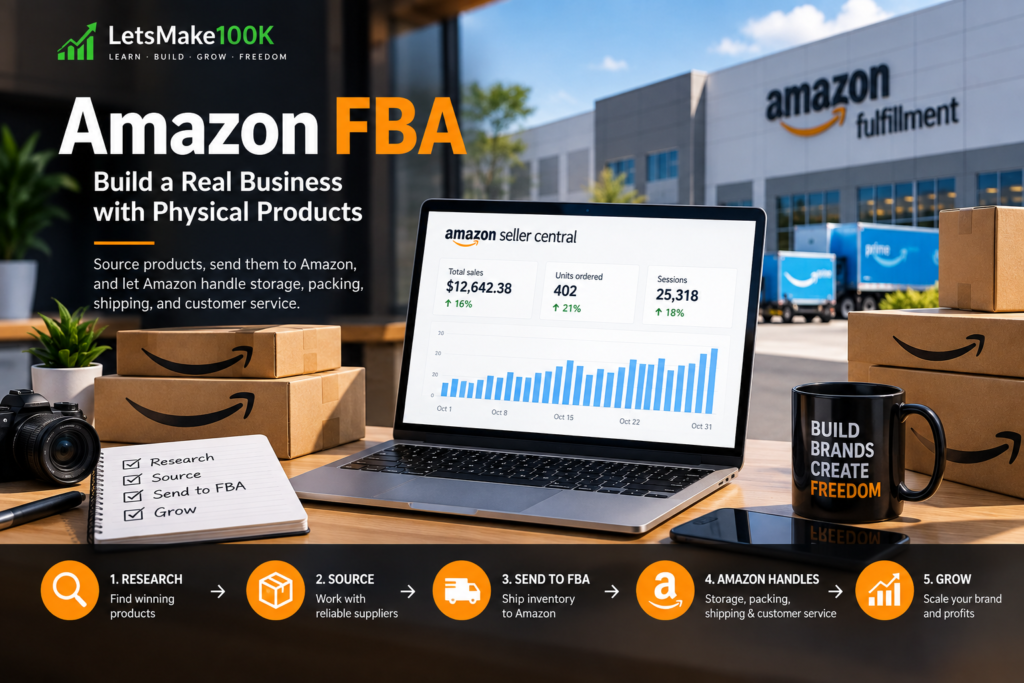
How Amazon FBA Works
Amazon FBA allows sellers to send inventory into Amazon’s fulfillment network. Amazon can then store the products, process customer orders, ship them, and handle much of the customer-service side while you focus on building and managing the business.
1. Research
Find a Product Opportunity
Research demand, competition, pricing, customer needs, and opportunities to differentiate your product.
2. Source
Find a Reliable Supplier
Compare suppliers, order samples, calculate landed cost, and make sure the numbers work before committing to inventory.
3. Fulfill
Send Inventory to Amazon
Prepare your products according to Amazon requirements and ship inventory into the FBA fulfillment network.
4. Grow
Optimize and Scale
Improve your listing, advertising, pricing, inventory planning, and overall offer based on actual sales data.
FBA Is Fulfillment — Not a Business in a Box
Amazon can store, pack, and ship your products. It cannot choose a profitable product for you, fix bad margins, control your supplier costs, or make a weak listing convert.
The business still depends on your product research, numbers, sourcing, positioning, advertising, inventory management, and decision-making.
Product Selection
Choose products based on demand, competition, margin, and differentiation.
Profitability
Know your true costs before placing a large inventory order.
Marketing
Build listings and advertising around what customers actually respond to.
Cash Flow
Manage inventory and reinvestment so growth does not create a cash shortage.
Revenue Is Not Profit
A product can generate sales and still be a bad business. Before you order inventory, you need to understand the full cost structure behind every unit you sell.
Example Selling Price
$29.99
Product + Landed Cost– $7.00
Amazon Fees– $9.00
Advertising– $4.00
Estimated Contribution$9.99
Know Your Numbers Before You Buy Inventory
Your selling price is only one part of the equation. Profitability depends on product cost, freight, packaging, Amazon fees, storage, advertising, returns, and other operating expenses.
Start With the Right Product
A good Amazon business starts with product selection. Before sourcing inventory, validate whether the market has enough demand, acceptable competition, healthy margins, and a realistic way for your product to stand out.
Demand
Is the product actually selling?
Look for consistent buyer demand rather than relying on trends, assumptions, or a product you simply happen to like.
Competition
Can you realistically compete?
Study competing listings, review counts, pricing, branding, images, and customer complaints to identify where opportunities may exist.
Margin
Does the math work?
Estimate landed cost, Amazon fees, advertising, returns, and other expenses before deciding whether the product deserves further investment.
Differentiation
Why would someone buy yours?
Look for practical ways to improve the product, offer, packaging, positioning, bundle, or customer experience.
Do not ask, “Can I sell this?” Ask, “Is there enough evidence to justify investing in this product?”
Source Smarter, Not Just Cheaper
The lowest unit price is not always the best deal. A reliable supplier, consistent quality, reasonable lead times, clear communication, and accurate landed-cost estimates can matter more than saving a few cents per unit.
Supplier Research
Compare more than one option
Evaluate multiple suppliers based on experience, responsiveness, production capability, certifications where relevant, and willingness to provide samples.
Samples
Inspect before you commit
Order and compare samples so you can evaluate quality, packaging, materials, fit, finish, and whether the product actually meets your expectations.
Negotiation
Understand the full deal
Compare unit pricing, minimum order quantities, payment terms, lead times, packaging costs, customization, and shipping options before placing an order.
Landed Cost
Know what each unit truly costs
Include manufacturing, packaging, freight, duties, inspections, prep, labeling, and other costs required to get the product ready for sale.
A cheap product that arrives late, inconsistent, or defective can become very expensive.
Build a Listing That Converts
Your Amazon listing is your digital storefront. Strong product positioning, clear images, relevant keywords, competitive pricing, and persuasive copy all work together to turn traffic into sales.
Images
Show the product clearly
Use high-quality images that explain what the product is, how it works, its key benefits, important dimensions, and why it is different.
Keywords
Match how shoppers search
Research relevant search terms and place them naturally throughout the listing so Amazon can better understand what your product is and who it is for.
Copy
Sell the benefits, not just the features
Use the title, bullet points, and description to answer common buyer questions, reduce uncertainty, and communicate the strongest reasons to choose your product.
Offer
Give customers a reason to buy
Pricing, packaging, bundles, coupons, reviews, delivery speed, and perceived value all influence whether a shopper chooses your listing over a competitor.
Traffic gets shoppers to the listing. Conversion turns that traffic into revenue.
Launch With Data, Not Guesswork
A strong listing still needs traffic. Amazon advertising can help put your product in front of relevant shoppers, but successful campaigns require disciplined testing, keyword targeting, bid control, and ongoing optimization.
Reach relevant shoppers
Start with search terms that closely match your product and buyer intent instead of trying to advertise against every possible keyword.
Campaign Structure
Keep your data organized
Separate campaigns and targeting types so you can identify which keywords, products, and placements are actually generating sales.
Bid Control
Protect your margins
Higher bids can produce more visibility, but they can also consume profit quickly. Set bids around your economics, not emotion.
Optimization
Follow the conversion data
Reduce wasted spend, strengthen profitable targets, improve weak listings, and use actual campaign results to guide future decisions.
Use the Right Tools at the Right Stage
Amazon sellers use specialized tools to research products, analyze keywords, estimate fees, study competitors, improve listings, and manage advertising. The right software can save time and improve decision-making, but no tool replaces sound business judgment.
Product Research
Find and evaluate opportunities
Use product-research software to study estimated demand, pricing, competition, sales trends, and potential product opportunities.
Keyword Research
Understand what shoppers search for
Identify relevant search terms, estimate search demand, and uncover keywords that can strengthen your listing and advertising strategy.
Profitability Tools
Model the numbers before you buy
Use fee calculators and profitability tools to estimate Amazon fees, landed cost, advertising impact, and potential margin.
Listing & PPC Tools
Optimize after launch
Use software that helps track rankings, improve listings, monitor competitors, and analyze advertising performance.
Recommended Amazon Seller Tool
Jungle Scout
Jungle Scout provides product research, keyword research, competitive intelligence, listing tools, supplier resources, and other features designed for Amazon sellers.